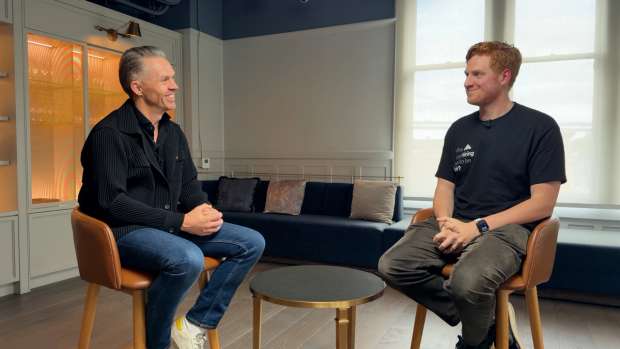
Welcome back to Talent Talks, a series where GV’s Talent team sits down with founders and leaders to share insights on how they approach hiring and retaining excellent teams. We share proven strategies and lessons with those who are getting started and working to build their own organizations.
I recently sat down with Joanna Strober, Founder and CEO of Midi Health, the virtual care clinic for women focused on perimenopause and menopause. Joanna is on a mission to address a care gap that affects 50% of the population—a problem that has historically been ignored, resulting in what she calls the “menopause penalty”: a staggering $26 billion lost in annual productivity. Joanna’s approach to building Midi is a masterclass in mission-driven scaling. For founders navigating complex operations, here are my three biggest takeaways from our discussion.
Hire for Potential When the Playbook Doesn't Exist
Because Midi Health is building a next-generation healthcare model that has never been done before, Joanna quickly realized she couldn't hire people who had “done this elsewhere.”
Quickly, her hiring criteria shifted. Instead of looking for a perfect resume match, Joanna looks for potential. She seeks out people who embrace difficult, unsolved challenges and are excited to learn on the job. In a new category, a growth mindset is often more valuable than specific past experience.
"Project Lewis and Clark": Democratizing Talent
One of the most innovative parts of Midi’s talent strategy is what Joanna calls "Project Lewis and Clark." Rather than competing for talent only in major tech hubs like San Francisco or New York, Midi searches for the best clinicians and Nurse Practitioners (NPs) in every corner of the country—from North Dakota to Georgia. By hiring the best talent regardless of location and then licensing them across multiple states, Midi can deploy high-quality care to patients everywhere. This strategy doesn't just help the business scale; it allows the company to tap into a much wider talent pool.
Reverse Engineer Your Future Org Chart
Joanna shared how important it has been to move away from reactive hiring. Instead of asking, "Who do I need today?" She now starts by visualizing the ideal org chart 12 months from now. By working backward from that future state, she can identify the leadership and technical roles she needs to start courting today, ensuring the team is ready for the company's growth trajectory rather than constantly playing catch-up.
You can watch the full video of our conversation with Joanna on the evolution of Midi Health and her vision for the future of women’s health above.