Unboxing 2026: Holiday App Trends & Proactive Health
The Christmas holiday remains one of the most significant periods for the app economy.
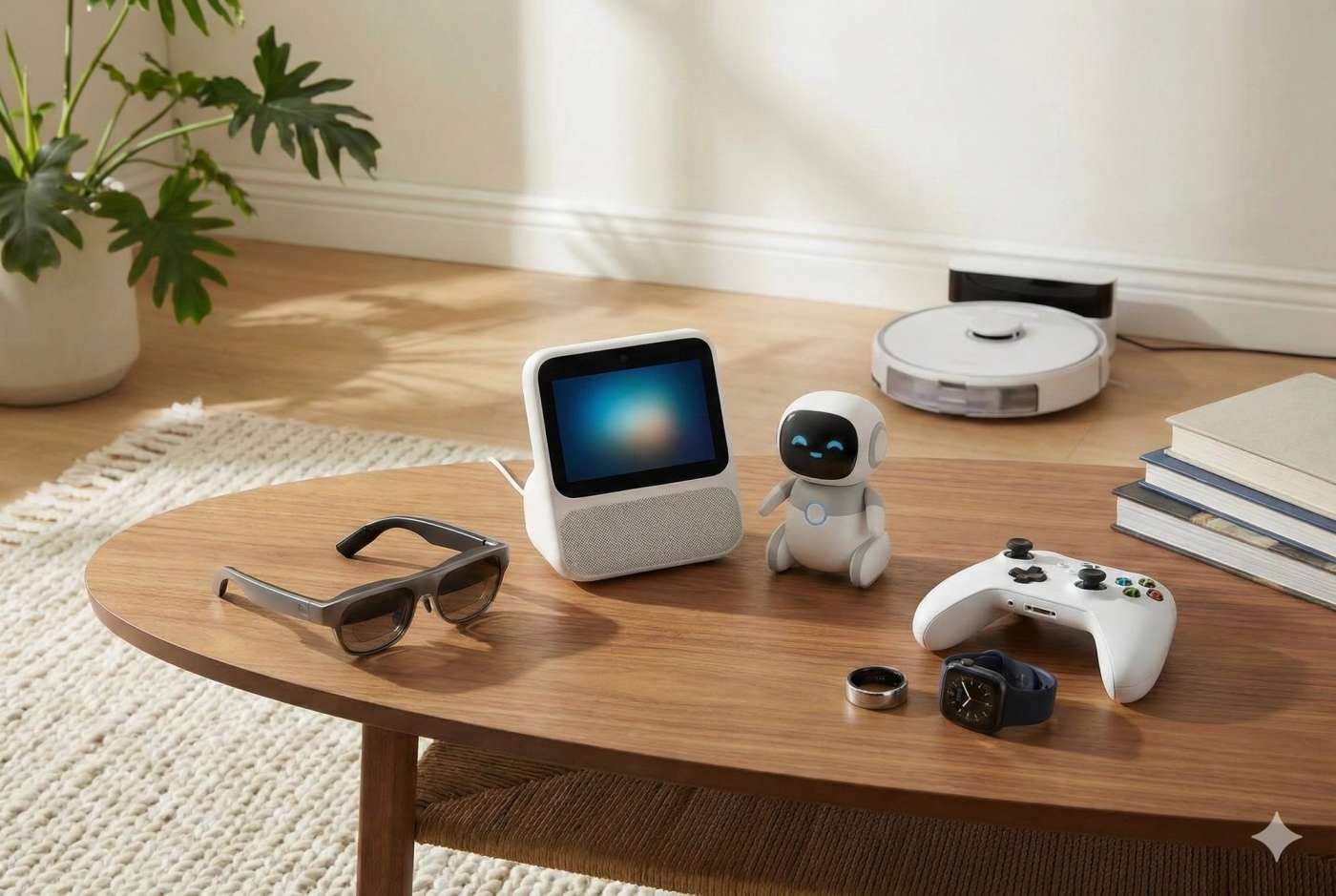
Christmas 2025: The Apps Shaping the Landscape
(New and old app goodies for the new year)
The Christmas holiday remains one of the most significant periods for the app economy. It is a time when new hardware is unboxed, fresh apps crash the charts, and emerging tech trends reveal their staying power.
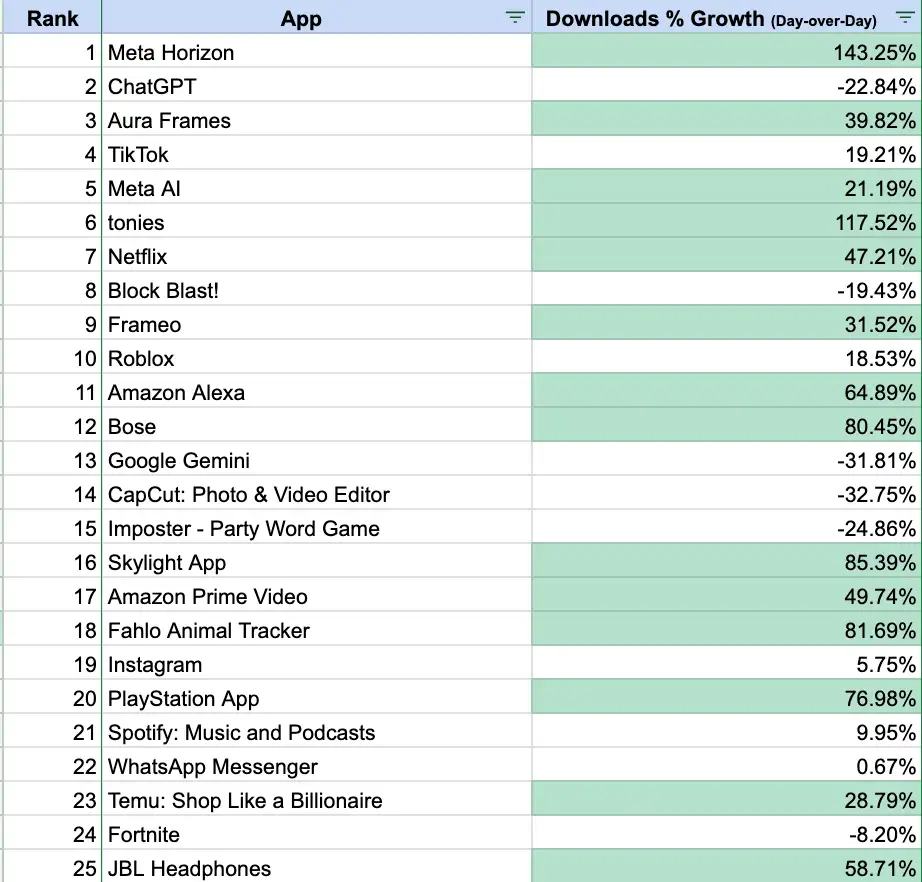
Top Downloaded Apps on Christmas - U.S.
(Source: Sensor Tower: 12/25 — U.S. — App Store/Play combined: Games + Apps. Green = Up At Least 20% DoD)
Extended Reality (XR) Splitting into Two Tracks
For (at least) the fifth consecutive year, Meta Horizon claimed the #1 spot, driven by the affordability of Quest devices for the gaming-focused youth market. However, a significant shift is occurring.
The Immersive Track: At-home VR/mixed reality remains a niche for immersive gaming and specific hobbies.
The Mainstream Track: AI-enabled smart glasses are quietly becoming the "mainstream play".
The 2026 Forecast: Expect XR glasses buzz to reach a fever pitch as Apple, Google, and Samsung enter the fray with AI enhancements that make wearable tech more useful for everyday users. Meta AI, the companion app for Ray-Ban Meta glasses, rose to #5 this year and may challenge for #1 by 2026 or 2027. That said, our ‘hot-take’ for this year is that these devices fail to hit PMF in 2026 - driven by a gross underestimation of how precious the real estate of your face is.
The AI-Infused Smart Home
While smart speakers like Alexa have struggled, GenAI is expected to give these devices a second wind.
Digital Frames: Aura Frames (#3) and Frameo (#9) remain holiday favorites, suggesting a strong consumer desire for simple, connected home displays.
The Opportunity: There is a major opening for Google Nest to leapfrog competitors by integrating tighter Gemini sync and aggressive marketing for home use cases.
Screen-Free Parenting and AI Companions
Parents are increasingly moving toward "screen-free" tech for children. We discussed this theme in a previous installment.
Audio Boxes: The Toniebox (#6) has sold over 134 million figurines, offering character-based audio experiences.
AI Robots: The Miko companion app reached #207, signaling a precursor to a mounting interest in AI-infused toys.
The Future: While complex from a privacy and safety perspective, AI-native "stuffed animals" and robots could become the training wheels for mainstream AI hardware adoption.
The Wellness and Wearable Boom
Health tracking has moved beyond simple step counting.
Oura’s Surge: Oura leaped to #36 in the rankings, with 2025 sales projected to double to roughly $1 billion.
Proactive Insights: The integration of AI into these wearables allows for proactive insights from biometric data, fueling further growth among wellness-focused "boomers" and younger generations alike.
Gaming: A Paradigm Shift
While traditional giants like PlayStation (#20) and Xbox (#56) saw their typical spikes, the real trend to watch is AI-driven UGC.
Interactive Worlds: AI is expected to radically lower development costs.
The "YouTube for Interactive Worlds": We are moving toward a future where a "Roblox meets GenAI" product allows users to build complex worlds through simple prompts. Also, discussed here.
Niche Successes: Trinkets and Predictions
Fahlo (#18): This animal-tracking bracelet outranked major gaming brands, proving that wildlife conservation elements can drive significant consumer interest.
Prediction Markets: Apps like Kalshi (#141) are gaining traction as users look to "predict" (bet on) live sports and events instantly, especially during marquee games over the holidays.
Task-Specific Robots: While humanoid robots are still years away for the average home, task-specific AI bots for vacuuming (Roomba at #130), mopping, and laundry might lead the consumer market through 2030.
Paging Dr. AI
(Proactive is the new active)
The period immediately following the holidays is perennially marked by flooded gyms and renewed vigor in health and wellness goals. Predictably, we are observing a similar mobilization among companies concentrated on health and wellness technologies. The ultimate prize these days is the ability to capture what feels like the operating system for proactive health. To date we’ve seen a few angles:
Wearables (Oura, Whoop): Having started with sleep tracking, both companies are leveraging their daily relationship with consumers to deliver on a proactive diagnostic health proposition. Whoop founder, Will Ahmed, describes as much here. And it seems the FDA is shelving its red tape on the category - we should expect a surge of innovation here as a result.
AI Doctors (Counsel Health, Doctronic): Combining the best of AI and human intelligence to deliver medical care in your pocket. In terms of big news from last week: the state of Utah unveiled an AI pilot that can autonomously renew medical prescriptions.
Diagnostics (Function Health, Superpower): Leveraging AI and in some cases, a doctor in the loop, to help patients make sense of lab reports. Never missing a good party, OpenAI announced ChatGPT Health, which will let users upload medical records and aggregate data from other health apps to evaluate test results and empower users. The company also recently acquired Torch to help build medical memory for AI.
Personalized health marketplaces (Healf): Confused on what next steps to take in your health journey? Players like Healf help translate insight into explicit, personalized purchases.
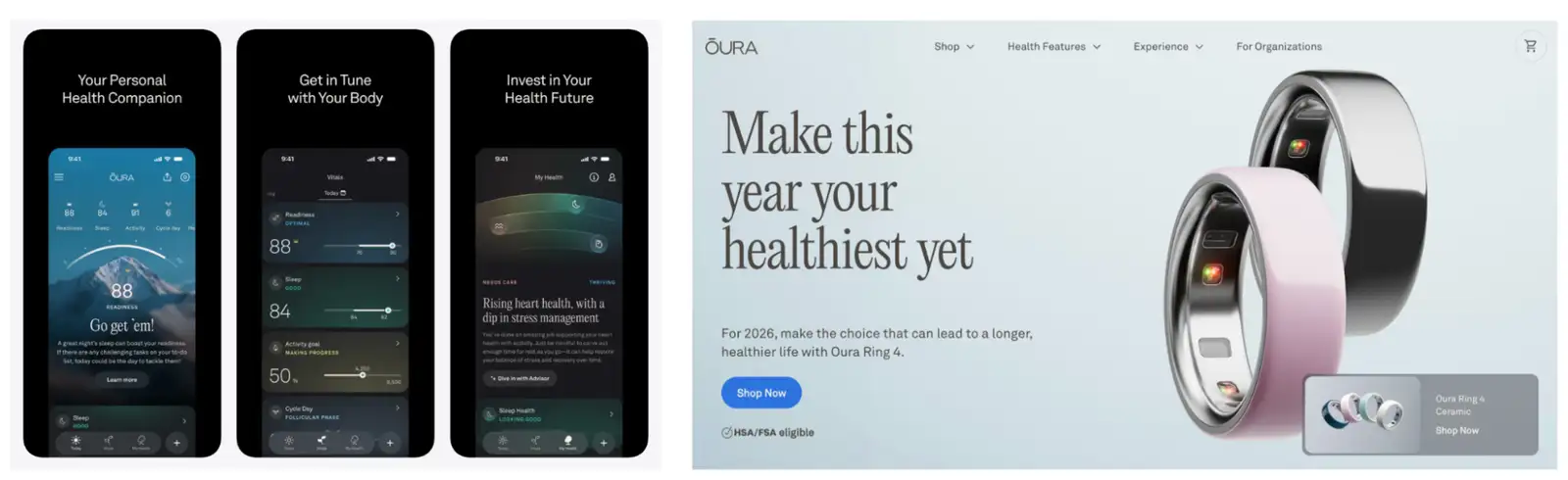
There is no shortage in tools helping consumers claim agency over their healthcare outcomes. Let us know if there are any categories we’ve missed here. We are keen to back founders looking to truly unlock preventative medicine.
Today’s article is brought to you by your friendly, neighborhood consumer team at GV. Down to kick the tires on any of the above? Hit us up at consumer@gv.com.