What Now? The Second Order Effects of AI
From digital detox tools to dumbphone resurgence — what comes after the AI novelty wave

Today’s Features:
Moove, Autolane, Vay: helping with AV fleet management and technical progress
Brick, physical device that temporarily ‘dumbs down’ your phone
Cara, Artfol, Procreate, Bandcamp: creative platforms and communities that have recently filtered out AI
Pixelfed: a decentralized, anti-AI version of IG
A few weeks ago, a buddy of mine, Yoni at Slow, published a piece around the second order effects of AI. The message was loud and clear: there are a lot of fun things to invest in once we move past the initial (and sometimes obvious) benefits of AI. In consumer land, I’d argue we are still in the very early innings of first-order development but thinking through ‘what happens next’ is a fantastic intellectual exercise. Let’s dig through a few examples that have come up across our team and the charts that inspired them.
Autonomous Vehicles
Source: Consumer Edge
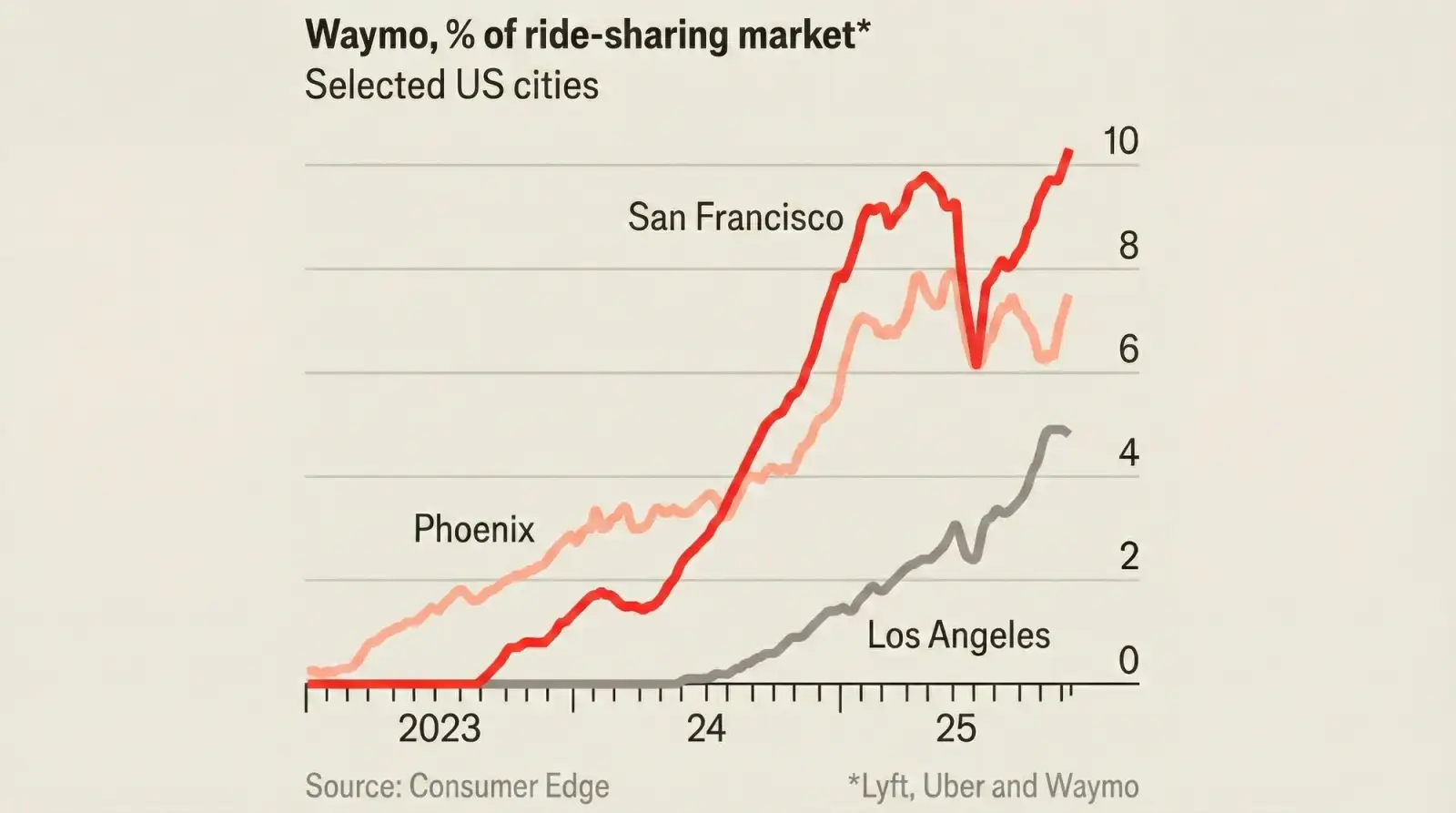
Waymo is on fire right now, and recent progress seems to point to its driverless tech cruising through nearly 15 cities this year. What’s next?: an explosion of startup services designed to support the AV economy:
Fleet & Infrastructure: Companies like Moove handle autonomous fleet management, while Autolane acts as "air traffic control" for orchestrating AV movements and curbside coordination.
The Virtual Cabin: Startups like holoride are redefining the "passenger economy" with motion-synced in-car VR experiences that prevent motion sickness.
Testing & Operations: Applied Intuition provides critical simulation and testing software, while Vay uses trained human "teledrivers" to support the transition to full autonomy.
Education
Source: US Bureau of Labor Statistics
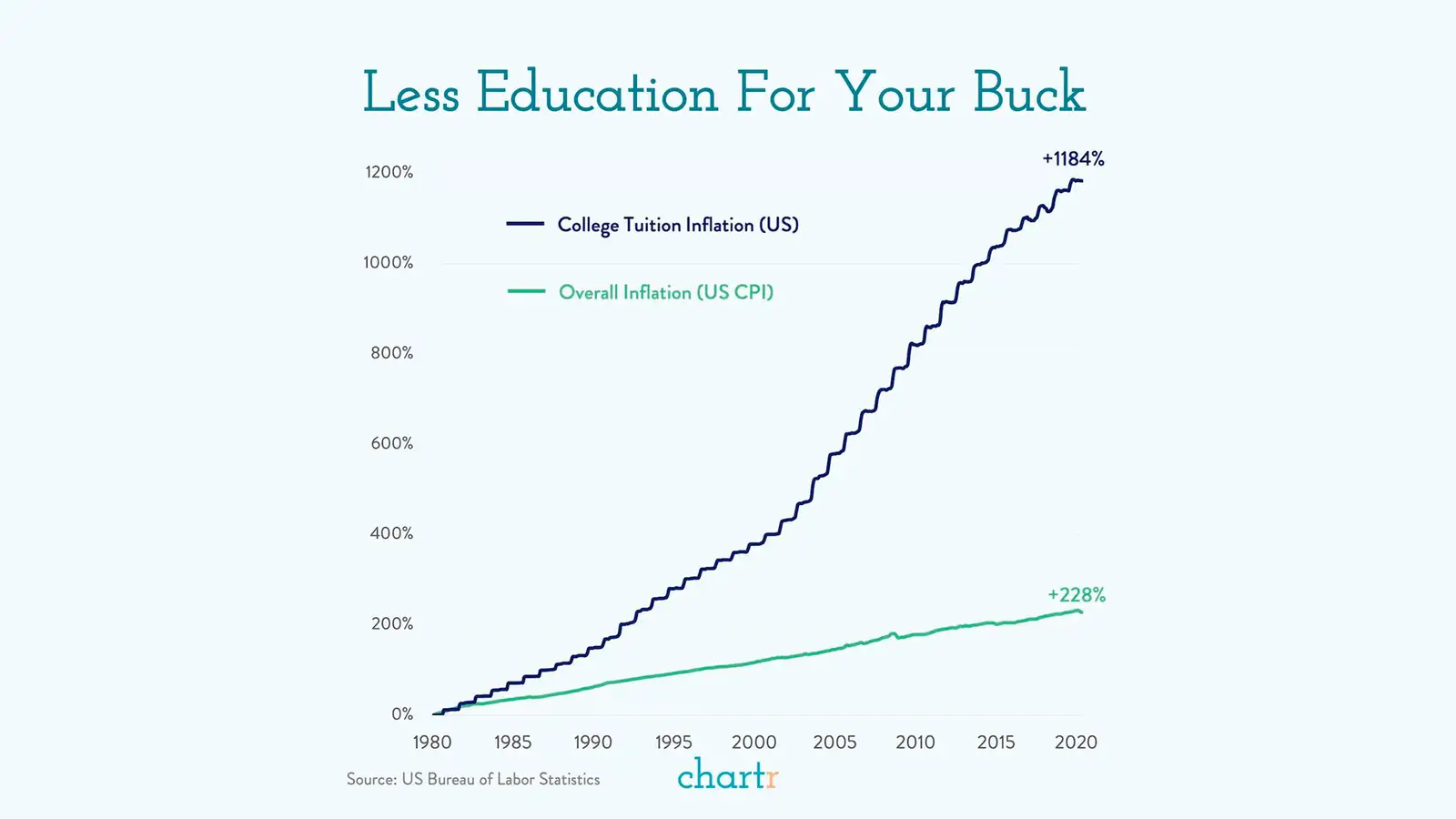
Is college worth it? The graph above paints a bleak picture. And if we are to believe that a primary goal of college is to land a great job, things get worse. It’s worth noting that the graph is dated to 2020, well before we saw massive inroads into AI adoption. Since 2022 (and the release of ChatGPT), certain tech industries have stopped growing and AI has since put the squeeze on new grads landing gigs - postings for entry-level jobs in the US dropped 35% since January 2023. Many signs seem to be pointing to one of the toughest job markets in a decade.
But never to waste a good tragedy, what if education was redesigned from the ground up for a more AI-native future? And what if education and employment were more explicitly linked? We’d love to see an AI-native alternative to the college degree - maybe one that integrates education and employment into a single platform by doing more than simply selling credentials to students. It could instead train job-ready talent and sell outcomes to potential employers. More to noodle on here.
Digital Detox
Source: Google Trends
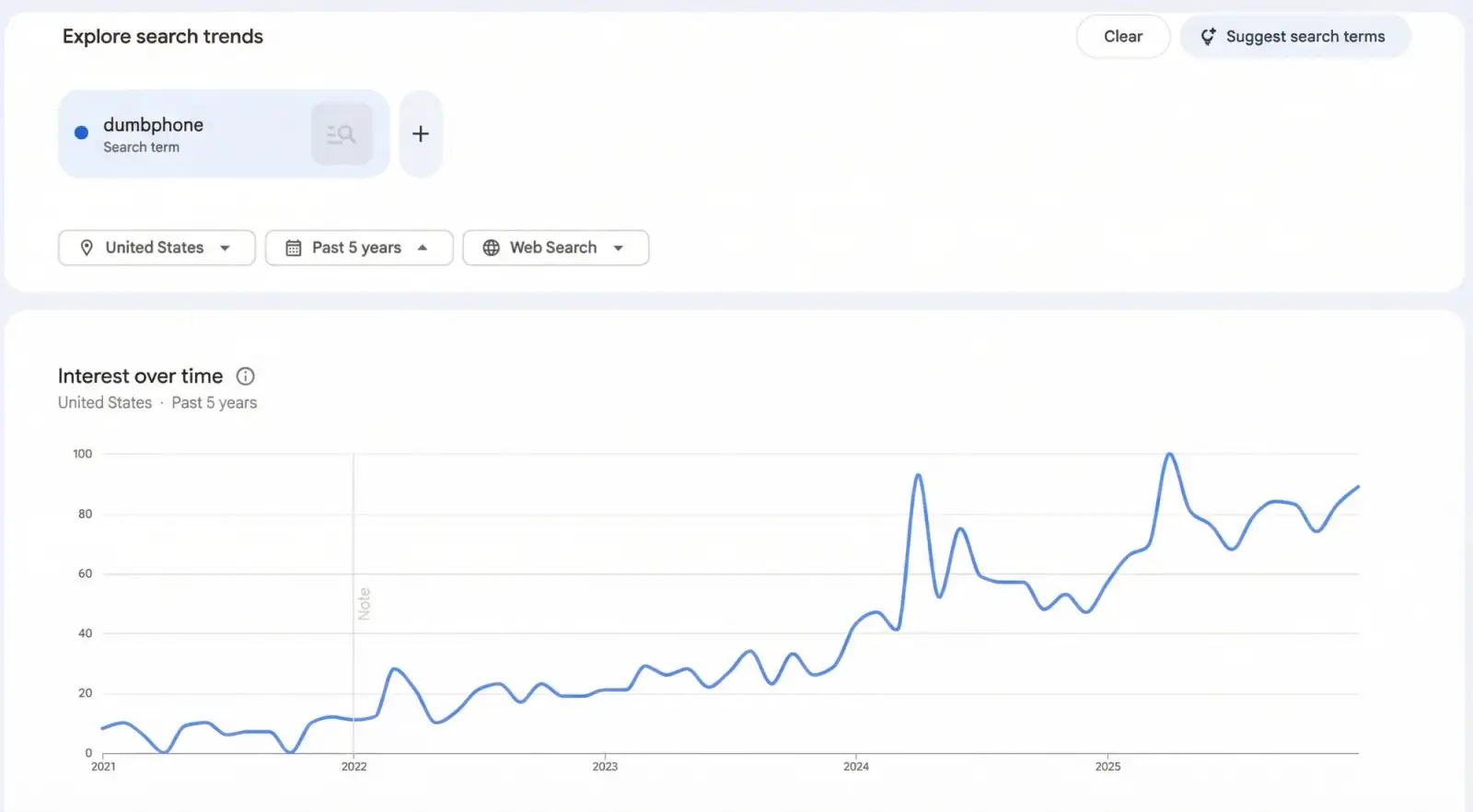
The deluge of "AI slop"—repetitive, unoriginal generated content— is accelerating a shift toward analog lifestyles. For many, the status symbol of 2026 is no longer the latest flagship phone, but a "self-bricked" device.
Leading detox trends
The "Dumbphone" Surge: Sales of basic devices rose 25% in 2025, with projections that "dumbphones" could capture 10% of the global market by mid-2026.
Physical Intervention: Tools like Brick, a physical device that temporarily removes distracting apps and notifications with a simple tap, are seeing a massive spike in search interest.
Screen-Time Control: Apps like BePresent (#30 in US. Productivity) and Opal are moving beyond simple tracking to active, behavior-shaping blockers.
Humans Only Please: If you must go digital, platforms like Cara and Artfol have surged in popularity by banning AI content to protect human artists. Procreate continues to be the #1 paid graphics app, leaning into its public rejection of generative AI features to keep creative decisions in the artist's hands. Platforms like Bandcamp have restricted AI-generated music, while decentralized alternatives like Pixelfed offer an ad-free, human-centric experience.
The list (and its opportunities) are endless. Hit us up with your thoughts on what second order effects we’ve missed or with any companies building in the spaces above. We’d love to hear from you.
Today’s article is brought to you by your friendly, neighborhood consumer team at GV. Down to kick the tires on any of the above? Hit us up at consumer@gv.com.