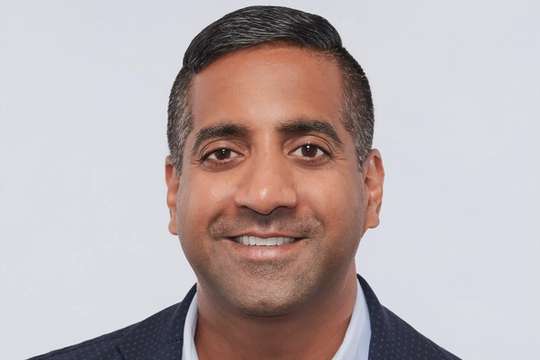
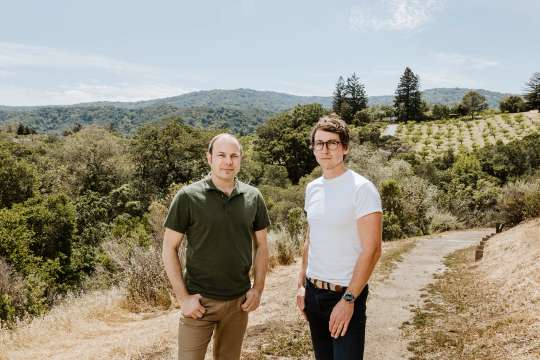
In November, I had the pleasure of sitting down with Zach Ziegler, co-founder and CTO of OpenEvidence, at our GV AI Builders event for a truly candid and honest conversation in front of dozens of entrepreneurs at different stages of the founder journey. We discussed the emotional toll of building an early-stage founder, Zach's prediction for the next big AI inflection point (hint: agents that operate in the world), and how they manage rapid change by focusing on product value regardless of the underlying LLM engine.
OpenEvidence is an incredible example of AI's power to solve mission-critical problems, having grown from 10 million to nearly 18 million clinical consultations per month in just the last few months. More than 40% of U.S. physicians now use the platform for clinical decision support. What's truly astonishing is how Zach and the team achieved this trajectory, especially within the famously challenging healthcare sector.
Zach offered crucial lessons and advice for builders. Here are a few takeaways that stood out from our discussion:
1. Focus on the Hardest Problem and Ignore the Noise
A core philosophy at OpenEvidence is ruthlessly focusing on "the hardest possible piece" of the problem and ignoring everything else that feels easier or more satisfying, such as building out systems or cool-looking websites. Zach shared that real progress is made by accepting the discomfort of "bashing your head against something that's not working".
For OpenEvidence, a major early breakthrough came from realizing they couldn't rely solely on clinical trials. They broadened their approach to include guidelines and meta reviews, acknowledging that the real-world practice of medicine requires pulling in all available evidence. This willingness to step back and pivot—something Zach noted they did no fewer than eight times—is key to achieving a truly transformative product.
2. The Power of Generality: The "Lightning in a Bottle" Moment
The product's viral success wasn't fully unlocked until it moved from solving a limited set of problems to solving every problem a doctor might face. This generality—the ability for a doctor to ask about literally any patient case, write patient handouts, or draft prior authorization letters—is what mirrored the success of general-purpose models like ChatGPT and proved they had found a "special piece". The team found that users started asking it to do things they hadn't even anticipated.
3. Trust is Built Bottom-Up, Not Top-Down
Physicians are not typically early adopters, but OpenEvidence's growth is driven by peers, not mandates. Zach contrasted the traditional healthcare approach of selling top-down to hospital systems—which often leads to poor adoption—with their direct-to-clinician (DTC) approach. Because the tool is fundamentally useful and solves the inherent difficulty of a doctor's job, physicians willingly adopt it, and the trust is cemented when an attending is impressed by a resident who used OpenEvidence to deliver an evidence-backed answer.
4. Quality Over Quantity in Team Building
OpenEvidence supports half the doctors in the country with only 25 engineers. Their lean approach emphasizes that a company lives or dies on "making like ten really good decisions". Zach's hiring philosophy is brutally simple: is this person one of the smartest people you ever met, and can you trust them with autonomy to make smart decisions? This focus on intellectual horsepower and trust is critical when scaling efficiently in a high-stakes vertical like healthcare.